
The New Orleans Jazz Museum is dedicated to the preservation and celebration of jazz music – past, present, and future. In addition to an evolving series of curated exhibits celebrating the genre’s history and influence, the museum has also always maintained an active program of live performances and recording dates showcasing contemporary jazz musicians from around the world.
In 2023, museum leadership – advised by the Herb Alpert Foundation – commissioned a thorough renovation of the building’s third-floor Performance Center to better align with the museum’s high standards for live and recorded music, as well as an increased emphasis on live-streaming and broadcast.
To ensure acoustic excellence and superior A/V performance of the refreshed space, Alpert brought acoustics and AV consulting and design firm WSDG into the project.
Rethinking a ‘magical’ space
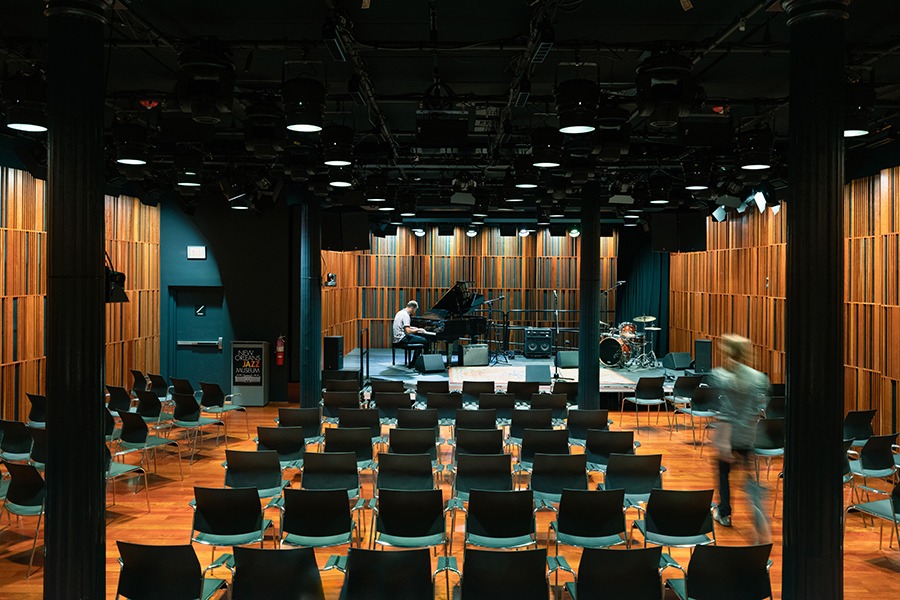
The museum’s Performance Center hosts live music five days a week, as well as serving as its central ‘live room’ for recording purposes. The renovation of the 150-seat capacity space and its attendant Control Room was driven by a desire for more robust production capabilities as well as a more refined location for the museum’s broadcast and webcast activities.
“The Performance Center has a wonderful acoustic signature and as such is a magical space, but it was initially designed to be a multi-purpose room,” explained New Orleans Jazz Museum Chief Production Engineer Danny Kadar.
“It’s an incredible place to play as a musician and take in a live performance as an audience member, but there were areas we wished to improve, as live-streaming and broadcasting have become a more important part of our programming.
“The opportunity arose post-pandemic to refit the space for these purposes, and at that point, we had a serious rethink of what we wanted to accomplish, and who could help us get there. This would allow us to focus on what the room’s usage has evolved to be.”
Herb Alpert – who has utilised the services of WSDG on many high-profile projects, including the UCLA Herb Alpert School of Music and Harlem School of the Arts Renaissance Project – introduced the firm to museum leadership.
WSDG partnered with Trapolin-Peer Architects, the museum’s architect, and Kadar and his team on the renovation of the space. “What makes this project special is that it was a holistic evolution of what the museum does best – presenting incredible live jazz performances and preserving these performances for future generations,” stated WSDG Partner, COO Joshua Morris.
“Working alongside Trapolin-Peer, who have redefined the look and feel of the museum over the past five years, we devised a program to elevate their performance and recording spaces while also supporting their pivot to live-streaming and broadcast.”
Elevation, aesthetics, and sonic versatility
A key part of the project was retaining the Performance Center’s existing acoustic character while tightening it in both an acoustic and A/V sense for its expanded range of responsibilities.
The WSDG Team took inspiration from the Performance Center’s slatted wood acoustic wall treatments to design a new, permanent front-of-house position that could serve these purposes. The team also made A/V recommendations for the sound system to optimise acoustic results.
“It’s ultimately a balance of needs here – preserving the magic of a small, lively performance venue while optimising it for recording and streaming,” said WSDG Partner, Director of Construction Technology, Matt Ballos.
“Doing that while also designing a purpose-built FOH position that matched the feel of the room allowed us to elevate the entire space without compromising what made it special in the first place.”
“WSDG brought a very different approach to what we’ve been used to when dealing with acoustics,” added Kidder. “Typically, we’ve worked with people who try to hide these elements away and aren’t working with the aesthetics of a given space. WSDG had a different approach, which incorporated the treatment into the millwork and worked with the aesthetics of the room.”
“We really learned a lot working together, and the results made a noticeable difference in how the space operates.”
More extensive renovations were made to the venue’s control room to turn it into a world-class recording and mixing space. This included reshaping the room and updating its interior room acoustics, building a new ISO booth, adding accommodations for Dolby Atmos recording and mixing, and reworking the HVAC systems for quieter operation.
The suite now provides the sound engineers of NOLA Jazz with a creative haven suitable for all of their audio recording needs. “We do a lot of work in that control room that goes beyond its initial remit – recording and broadcasting the shows, recording artists for release on Gallatin Street Records, creating audio content for the museum exhibits, the list goes on,” said Kadar. “Now we finally have a control room where we can do all these things and mix in-house.
“It sounds fantastic in there now, and it’s been a total game-changer for us. We couldn’t be happier with how the project turned out.”
“The work of the NOLA Jazz Museum is vital to the preservation of one of the great American art forms,” concluded Morris. “We’re incredibly proud of the work we’ve been able to accomplish to aid in this important mission. Even better, it means we get more and better jazz in the world, which is something we could all benefit from!”