
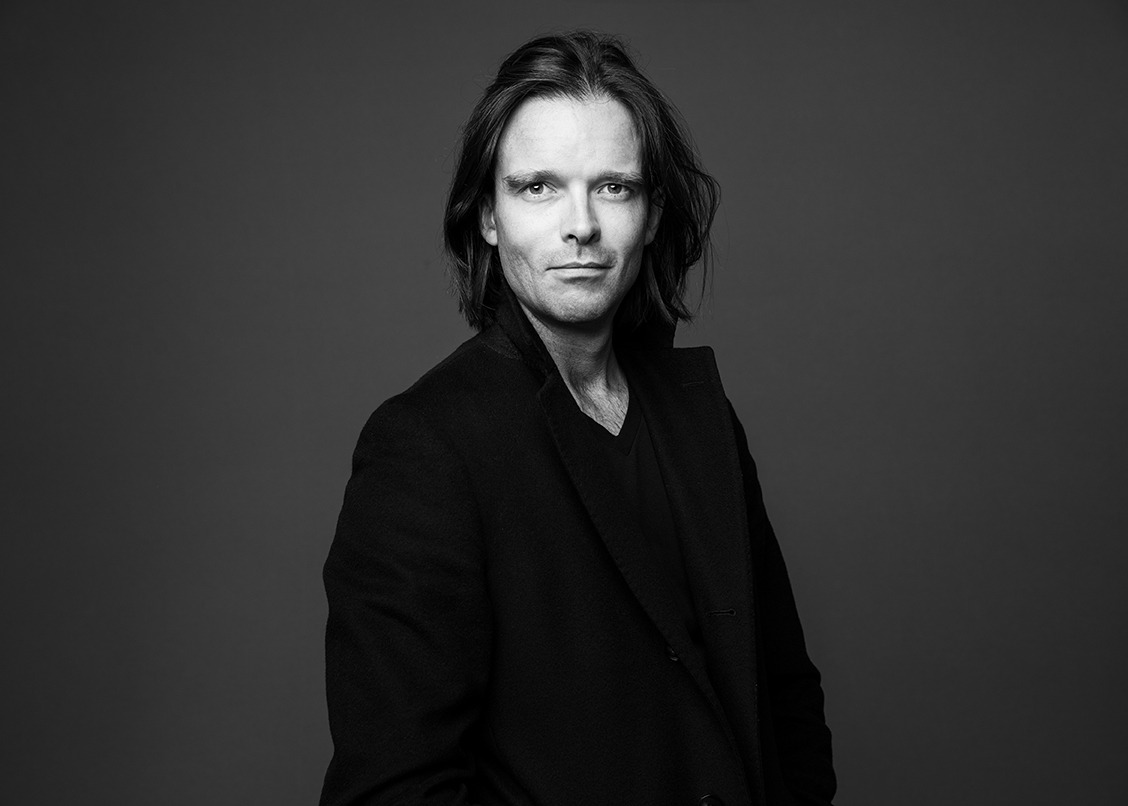
Having spent his youth enveloped in the performing arts world, Gaëtan Byk is continually inspired as he makes his own mark on the pro audio industry via passion, research and a deep understanding of artistic expression.
As owner of loudspeaker manufacturer Amadeus and co-founder of spatial audio innovator HOLOPHONIX, Byk immerses himself in sound, taking both companies in directions that he believes too few in the industry are currently exploring.
“Our ambition is to remain the place where art, science, and technology meet on equal terms – the partner you call when you need something that doesn’t exist yet, or that others say can’t be done,” said Byk.
Read the full article in the 35.6 edition of MONDO-DR here (and below.)
Byk took over Amadeus in 2021, acquiring the business from its former owners, including his father Bernard, who had co-founded the company in 1992 alongside Michel Deluc and others. In the company’s early years as Amadeus was establishing itself, Gaëtan was given an eye-opening introduction to the industry.
“From my earliest days, my father would take me everywhere: theatres, concerts, festivals, recording studios,” said Byk. “He introduced me to artists, engineers, and fellow professionals who opened my eyes and ears, and gave me this passion for sound, for music, for live performance, and for the technologies that serve these worlds.”
One person he met was Thierry Coduys – an artist, sound engineer, and creative technologist whose work bridges music, performance, and advanced sound processing – who mentored Byk during an internship in his teens.
“His world, where art and technology form a single creative language, shaped how I saw the possibilities of sound. Decades later, in 2017, he would become my partner in founding HOLOPHONIX, our spatial sound venture developed within Amadeus in collaboration with IRCAM and CNRS,” said Byk, who went on to explain how his involvement with Amadeus began.
“I see myself first and foremost as an entrepreneur with a visceral passion for sound, music, and live performance. My academic background was in law, and then advertising, but sound has always been a constant undercurrent. I created my first live production company at the age of 20, in 2007, then another in 2012, followed by two consulting firms in 2013 and 2014.
“My story with Amadeus began in 2012, almost by chance, as an external consultant working part-time on intellectual and industrial property matters – trademarks, patents, brand protection. From there, my role expanded into marketing, product development, and eventually business strategy.
“Year after year, I was drawn deeper into the orbit of the brand, its clients, its projects, its creative challenges, until, in 2020, I proposed to the shareholders that I take over the company entirely. The acquisition was finalised in 2021.
“It has been a long journey to define a clear and obvious direction in an almost saturated audio market. The sheer number of manufacturers and products is overwhelming, and much of it feels uniform, interchangeable. Without genuine innovation and bold ideas, I believe the brand would not have survived.
“Our strength lies in the fact that we come from the studio world, where fidelity is not a marketing term but an absolute imperative, and to bring that philosophy into the live domain. Equally distinctive is our ability to design and manufacture entirely bespoke products for specific applications, projects, and needs.
“I believe we are the only brand in the world able to deliver true ‘Haute Couture’ in sound, because we have the DNA, the talent, the people, and the structure to make it a reality.
“Projects like HOLOPHONIX, which I initiated within Amadeus before giving it its own life as a dedicated spin-off company, are part of this drive to push boundaries. This combination of craftsmanship and technological innovation is the space I have sought for Amadeus over the past decade, and it remains the space in which I want the brand to thrive for decades to come.”
Inspired by seeing performances in his formative years by jazz musicians ranging from Marcus Miller and Pat Metheny to Dee Dee Bridgewater and Diana Krall, Byk realised early on about the power of music and its ability to carry emotion.
“Sound is processed in the brain faster than visual signals, and the auditory pathway connects directly to the brain’s limbic system which governs emotion and memory,” continued Byk. “When we hear, we do not simply decode information, we feel. Music, for example, can trigger dopamine release in the brain’s reward centres, stir the mirror neurons that foster empathy, and awaken memories long thought forgotten. Certain qualities of sound – a slow tempo, low frequencies, an enveloping spatial field – can calm the nervous system, reduce anxiety, and anchor us fully in the present moment.
“And yet we live in an extremely retinal world, relentlessly visual. We are constantly bombarded with images, advertisements, and the addictive visual noise of social media. Even in theatre, opera, live performance, and fashion, the visual often takes precedence, and budgets overwhelmingly flow to what can be seen.
“I fight, alongside many believers, to place sound at the heart of projects, to give it as much weight as the visual, because it touches a sense just as fundamental and as essential to human experience.
“Since 1992, Amadeus has had a department dedicated solely to conceiving unique acoustic and electro-acoustic solutions for theatres, opera houses, studios, composers, research centres, and polymorphous artists.
“In this space, craftsmanship and technological innovation meet and amplify each other. We explore forms, materials, and technologies without compromise, shaping objects where performance and artistry are inseparable.
“Over the past decade, this approach has led us to projects our competitors could not, or would not, take on: oxidised Corten steel loudspeakers for the legendary Krug Champagne House; stone-clad, invisible speakers for the Panthéon; an electro-acoustic device hidden inside a flying grand piano; high-power, water-resistant subwoofers made of Corian solid surface; a 40m sound bar for the Cour d’Honneur at the Festival d’Avignon; gold-leaf loudspeakers for the Sainte-Chapelle; a spatialised wall containing 400 bottles of champagne; and hundreds more products created to meet ultra-specific requests for which no existing solution on the market could suffice.
“At present we are developing nearly 100 mirror-polished stainless-steel loudspeakers for a one-of-a-kind, mirror-filled immersive art experience by artist Kenzo Digital. In this installation, the speakers transcend their traditional role by becoming sculptures, integral to the artwork itself. None of the other manufacturers consulted by Kenzo Digital and the scenographers were able to conceive such a concept, and certainly not to bring it from concept to reality within such a short timeframe.
“We deliberately choose the complex, the un-standardised, the singular; projects that demand a rare combination of skill, creativity, and trust – where the loudspeaker is not just a tool, but a cultural and aesthetic statement.”
With a significant rise in the demand of spatial audio across a plethora of applications over the past decade and a half, HOLOPHONIX was created by Byk with the support of two research institutions.
“HOLOPHONIX is, by essence, a child of research and creation, and with the support of some of the world’s most visionary scientific and artistic minds, notably at IRCAM and CNRS, it is not just a technical partnership but a cultural alliance,” said Byk.
“The IRCAM – Institut de Recherche et Coordination Acoustique/Musique – is one of the most important research centres in the world, and The CNRS – the French National Centre for Scientific Research – is equally exceptional and represents a concentration of knowledge, vision, and scientific rigor that few organisations can match. Working with these two institutions is both an honour and a privilege; it means being constantly challenged and stimulated, exposed to ideas that push far beyond the frontiers of our industry.
“Since 2023, when HOLOPHONIX became an independent company with its own resources, legal identity, and a €3.9 million capital increase, our collaborations have only deepened.
“Our team at HOLOPHONIX now numbers around 15 people, bringing together expertise in software development, signal processing, hardware engineering, industrial design, and artistic practice.
“Coupled with the brilliance of the researchers at IRCAM and CNRS, we have the intellectual and creative firepower to rethink how sound is conceived and experienced, particularly in live performance.”
Byk believes that there are still barriers to overcome with spatial audio technology, and it will be a collective, industry-wide effort to see the technology thrive to its true potential.
“The technology is here; what’s missing is time, energy, and the right tools to reshape the market,” he said. “In live performance especially, the sector is still largely stereo based, by habit, by portability constraints, and by workflow inertia. We need to evolve mindsets, optimise workflows until they’re simple and transparent, and train users extensively in these new approaches, technologies, and algorithms.
“We also need more ergonomic, affordable tools to democratise spatial practices. A key example is real-time performer tracking. If we want perfect sonic–visual coherence in live shows we need simpler, more accessible systems that cost a fraction of current solutions. That’s why we are developing a proprietary, sound-only tracking system, which is less precise than advanced video or lighting trackers, and designed to be roughly 10 times cheaper.
“The only real limit today might be cost. Spatial FOH systems, immersive 2D/3D arrays, or active acoustics enhancement setups require investment, but when considered against the leap in audience experience and the richness of artistic possibilities, provided they’re used as genuine tools of expression rather than gimmicks, the value is undeniable.
“When spatial audio is deployed effectively, it’s not about ‘immersive’ in the buzzword sense; it’s about delivering what I’d call a real image (a kind of ‘next step’ after stereo) to the majority of the audience.
“In many projects, we’ve reached situations where almost 100% of listeners can perceive and localise sources across the stage, instead of everything collapsing to the centre or being reinforced only from one side. Since the advent of line arrays, we’ve had excellent L–R systems – but now we have tools to extend that image to nearly everyone, opening an entirely new chapter in live sound design.”
When it comes to sound design – for either a live event or a fixed installation – Byk prefers to work from the ground up and be in collaboration with the end users as early as possible.
“While we have always had a very flexible approach, in most cases when we work with closely with end users to design a bespoke solution, the contractual and implementation phases go through an integrator or, in some cases, a contractor,” continued Byk. “This ensures the project is delivered, installed, and supported in line with all technical, logistical, and compliance requirements.
“That said, a ‘direct’ relationship at the design stage is essential for us. Clients want to work with the people who design and build the hardware or software solutions. They want to share ideas without filters, dive deeper into technical detail, and address highly specific needs.
“Only a very small number of projects are handled entirely ‘direct’ with the end user, and this typically happens when there’s no integration required, the solution is an extremely unusual one-off, or when the client is in a region not yet covered by an official distributor or partner.”
With an increasing number of certified partners across the world, the path to growth is in place, as Byk explained: “The arrival of Yassine Zaim as our International Sales Director, formerly at Devialet and Roon Labs, is a big part of our global growth strategy.
“His experience at the intersection of music, technology, and complex international sales, combined with his ability to build strong ecosystems, is helping us expand both Amadeus and HOLOPHONIX into new regions and sectors, with a much more strategic approach to distribution.
“The challenge is always the same – finding partners who share our DNA, our philosophy, our obsession with detail, while also being able to sell and support more standard product lines, which still represent most of our business volume. Striking that balance allows us to stay close to the field while extending our reach globally. Over the next five years, I see Amadeus and HOLOPHONIX continuing to move in directions very few in our industry are exploring. Our ambition is to remain the place where art, science, and technology meet on equal terms, being the partner you call when you need something that doesn’t exist yet, or that others say can’t be done.”
Education also represents a big part of the plan, in addition to scaling up both company’s manufacturing offerings.
“We are building a full training and learning ecosystem for HOLOPHONIX, with free online resources, technical guides, tutorials, and e-learning modules, and we are scaling our manufacturing in the opposite direction of most,” said Byk. “While others outsource more and more, we are bringing production increasingly in-house. Right now, we are building a brand-new 2,000 sq m factory in the Paris region to boost capacity for both Amadeus and HOLOPHONIX, equipped with new high-precision SLA 3D printers, five-axis CNC machines, and other advanced tools. It’s about being ready to meet demand without ever compromising the craftsmanship and quality that define us.
“On the R&D side, we’re already deep into projects that remain very confidential, tackling things like active noise reduction, active low-frequency absorption, 3D beamforming, complex-field simulation, and even developing metrics to objectively qualify immersion.
“We’re also collaborating with scientific partners on sound-based therapy – an area I believe has huge potential.
“I believe so deeply in the power of sound that we are currently developing a project in collaboration with several major institutions to harness it for therapy, to help reduce stress and anxiety, to assist in pain management as a complement or alternative to medication and to slow the progression of neurodegenerative diseases.
“This is not about replacing science with art, but about recognising that the two can meet in a way that transforms both wellbeing and creativity.”
Tied to sound from an early age, Byk has been on a mission to provide aural clarity with as little aesthetic intrusion as possible, to make experiences more democratic and respectful of audiences.
“For me, the magic happens when technology disappears entirely into the artistic vision – when it feels so natural, so seamless, that the audience forgets the machinery and experiences only the emotion.
“My most memorable moments in theatre, opera, or live performance have come when artists wield the tools so intuitively that they become invisible, leaving only the work, the story, the connection.
“I belong to the school of thought that begins with a deep belief in why a technology should exist: to solve real problems, to inspire, to elevate experiences, to unleash creativity. Technology for its own sake is vanity. Technology in the service of a greater purpose is where the real magic happens.”